Tom, Rach & Will
Snelling DNA
Historical Analysis, December 2024
Preface
Take these results with a grain of salt — this DNA analysis does not tell us who our ancestors were directly, but instead how similar our DNA is to the analysed DNA of other modern and ancient peoples.
That said, this similarity is enough to at least give us an idea of where we come from and who we are descended from. The results at least seem reasonable, given what we already know of our ancestry.
Timeline
The following timeline breaks down the make-up of our DNA over a number of historical periods. The percentage values tell us how statistically similar our own DNA is to people living in each era. From one period to the next we can see how this similarity is affected by migrations, invasions, and other demographic changes.
Bronze Age: 7000 BC - 1500 BC
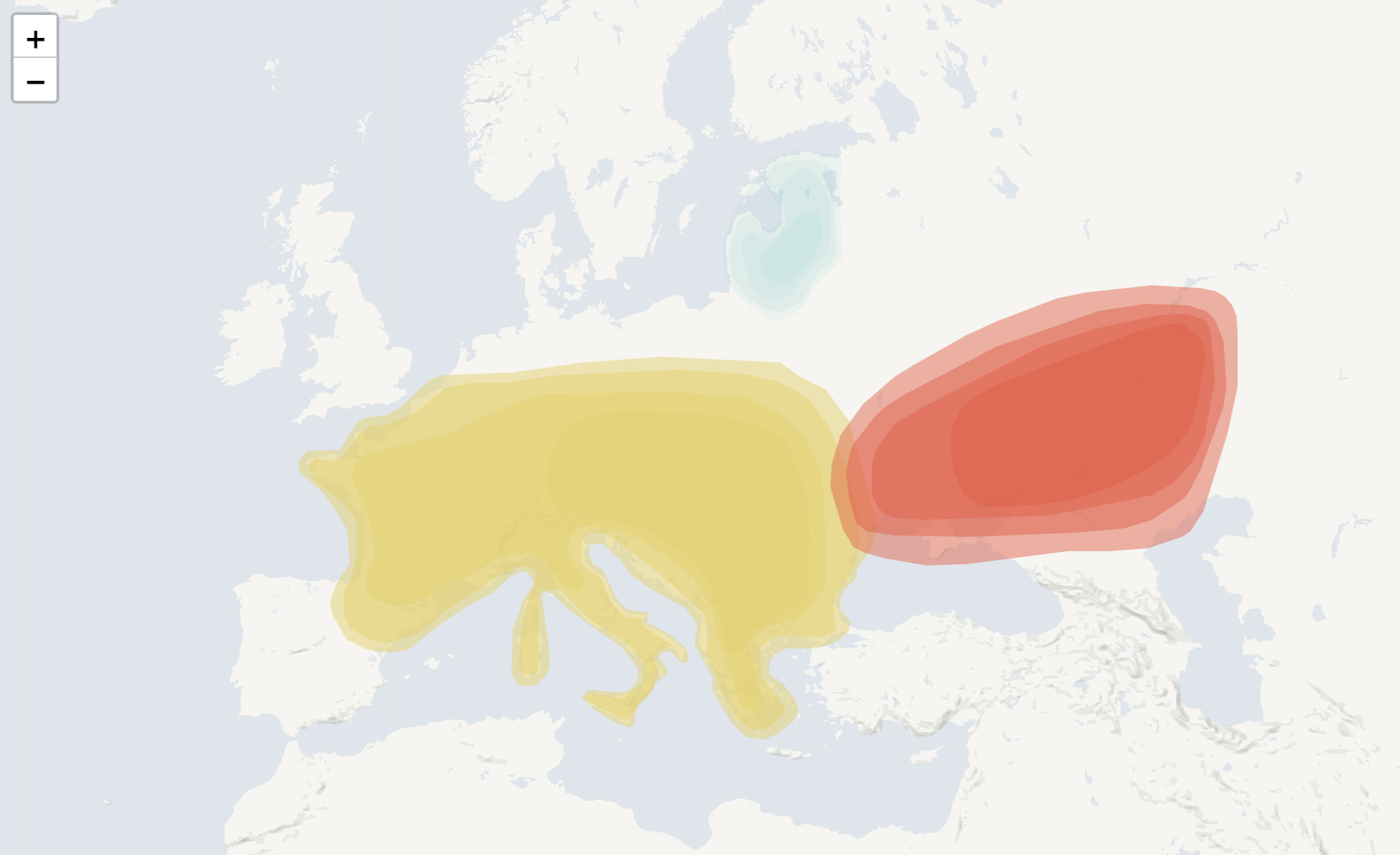
During the Bronze Age, our ancestors were at the crossroads of great migrations and transformative innovations. Early European Farmers, pioneering agriculturalists, tilled the soil of ancient Europe, sowing the seeds of civilization.
Meanwhile, the Yamnaya herders from the vast Pontic Steppe brought not only their Indo-European languages but also their daring spirit of exploration, blending with the farming communities they encountered.
European Farmer
53.4%
Early European Farmers were a group of the Anatolian (modern day Turkey) Neolithic Farmers who brought agriculture to Europe and Northwest Africa. EEF ancestry is common in modern European and Northwest African populations.
Western Steppe (Yamnaya)
45.8%
During the Chalcolithic and early Bronze Age, people who had Western Steppe Herder (WSH) ancestry moved into Europe and mingled with the EEF population; these WSH, originating from the Yamnaya culture of the Pontic steppe of Eastern Europe, probably spoke Indo-European languages.
Baltic Hunter-Gatherer
0.8%
Iron Age: 1000 BC - 100 AD
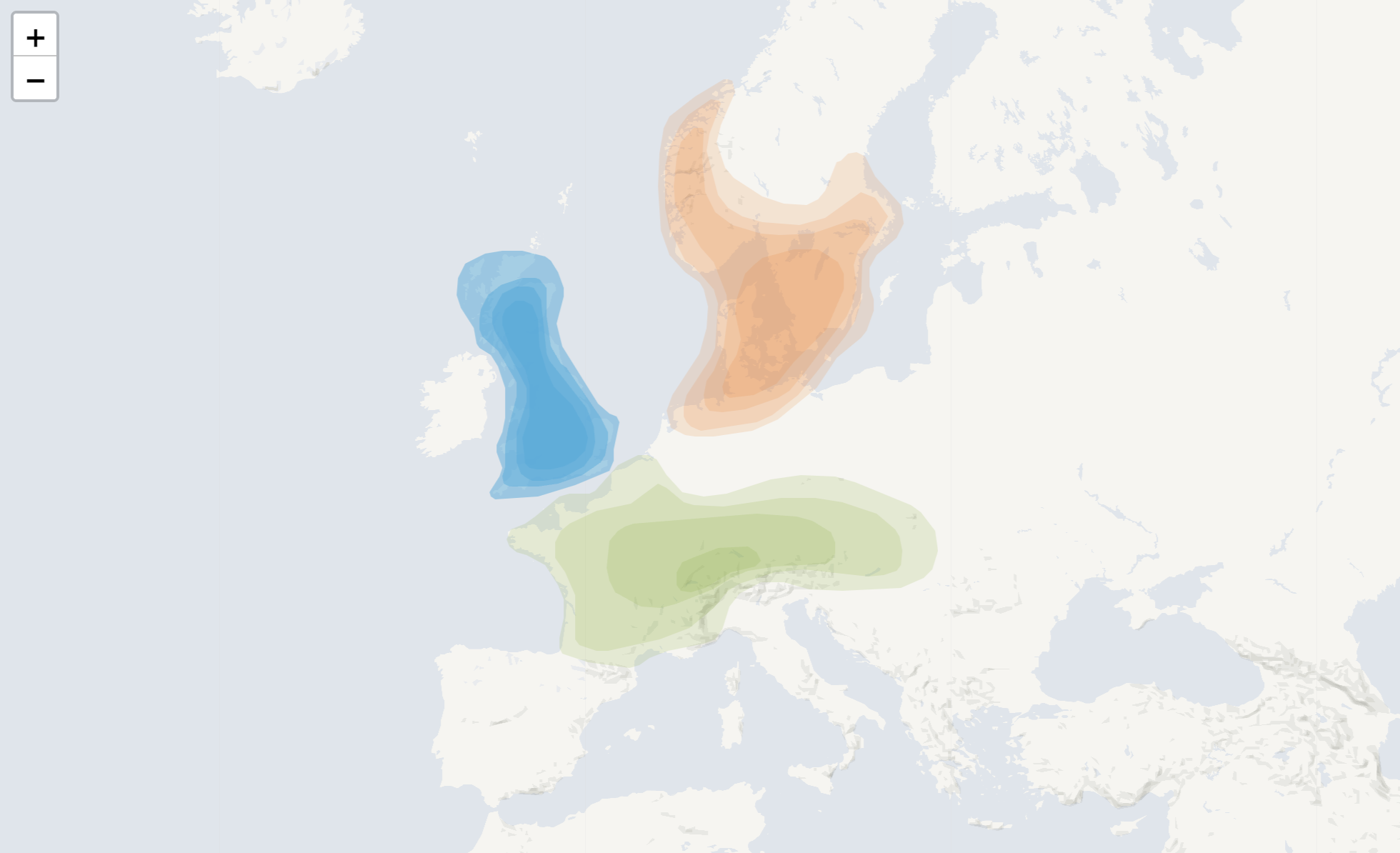
As the Bronze Age gave way to the Iron Age, the Britons emerged as a resilient people who cultivated the land and culture of the British Isles. Our high percentage of Insular Celtic ancestry reflects a deep connection to these early inhabitants of Britain, who were adept at crafting tools, building settlements, and preserving traditions.
Insular Celt
69.4%
The Insular Celts (or Britons) were the people native to Britain before the Roman invasion. They were descended from Early European Farmers and had come over to Britain from the continent from around 1300 to 800 BC.
Parisi
53.4%
The Parisi were a tribe of Britons native to east Yorkshire.
Cantiaci
12.2%
The Cantiaci were a tribe of Britons native to Kent.
Votadini
3.8%
The Votadini were a tribe of Britons native to south-east Scotland.
Germanic (Iron Age Scandinavian)
15.4%
Continental Celt (Eturia)
15.2%
Etruria was a region in central Italy. The Etruscans were the dominant culture in Italy before the rise of the Romans.
Migration Period: 100 AD - 600 AD
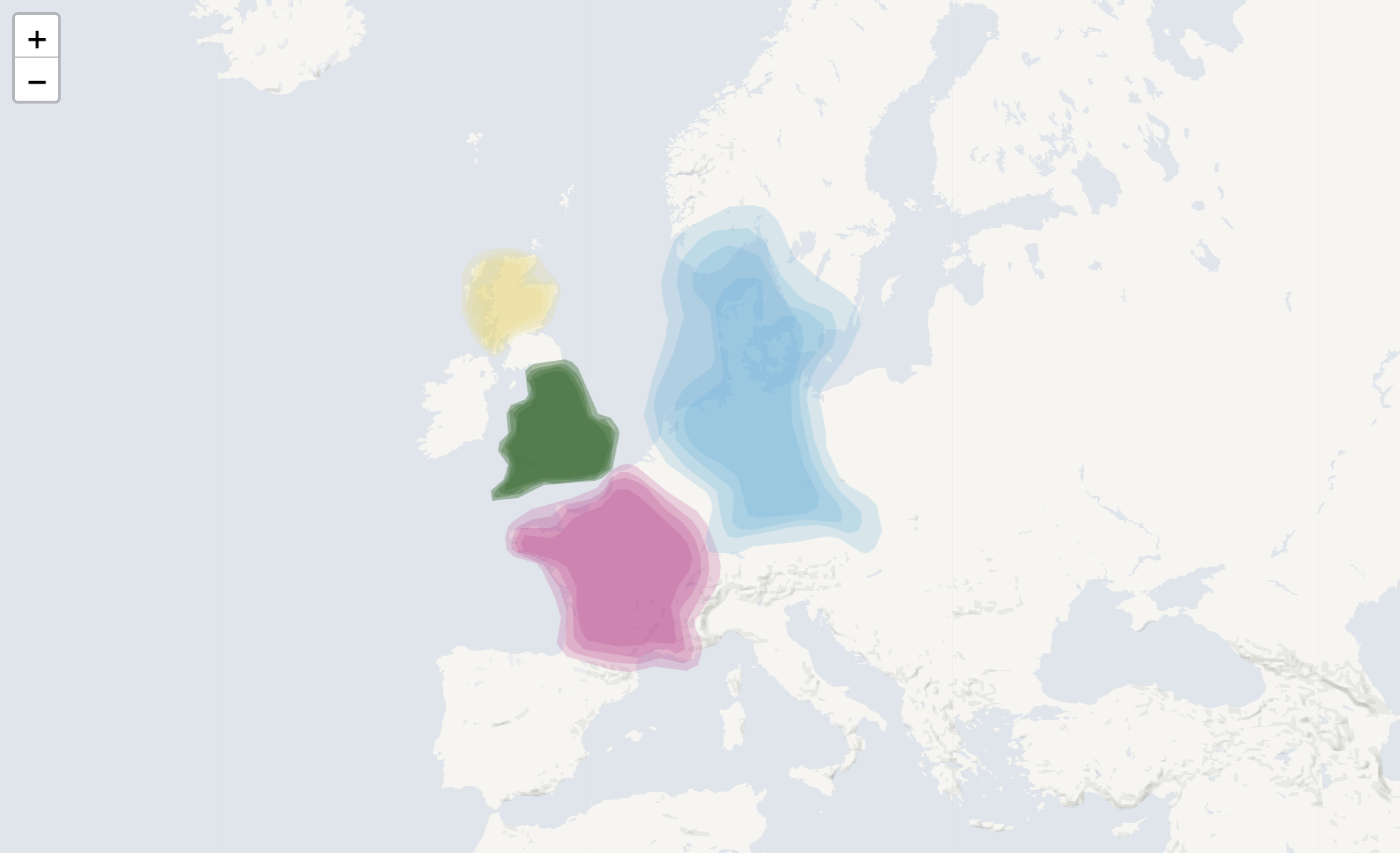
With the fall of Rome came an age of flux, as new identities began to form from the remnants of Roman Britain and the influx of Germanic tribes. Our DNA reveals a legacy of adaptability, with Roman Britons carrying on traditions while mingling with imperial Romans and neighboring Gauls.
The emergence of Gothic and Longobard influences hints at connections to the Germanic tribes who redefined the boundaries of Europe, while the Picts remind us of the enduring, rugged spirit of Scotland’s ancient north.
Roman Britain
42.8%
The Roman Britons were still the same natives, living in Britain under Roman rule. There would have been some mixing with imperial Romans stationed or living in Britain.
Roman Gaul
19.4%
The Gauls were also a Celtic people, sharing ancestors with the Celtic Britons.
Germanic
19.2%
Goth
14%
The Goths were a Germanic people who played a major role in the fall of the Western Roman Empire and the emergence of medieval Europe.
Longobard
5.2%
The Longobards (or Lombards) were a Germanic people who conquered most of the Italian Peninsula between 568 and 774 AD.
Pict
18.6%
The Picts were a group of peoples in what is now Scotland north of the Firth of Forth. The term “Pict” is found in Roman sources from the end of the third century AD, when it was used to describe unromanised people in northern Britain.
Medieval Era: 600 AD - 1400 AD
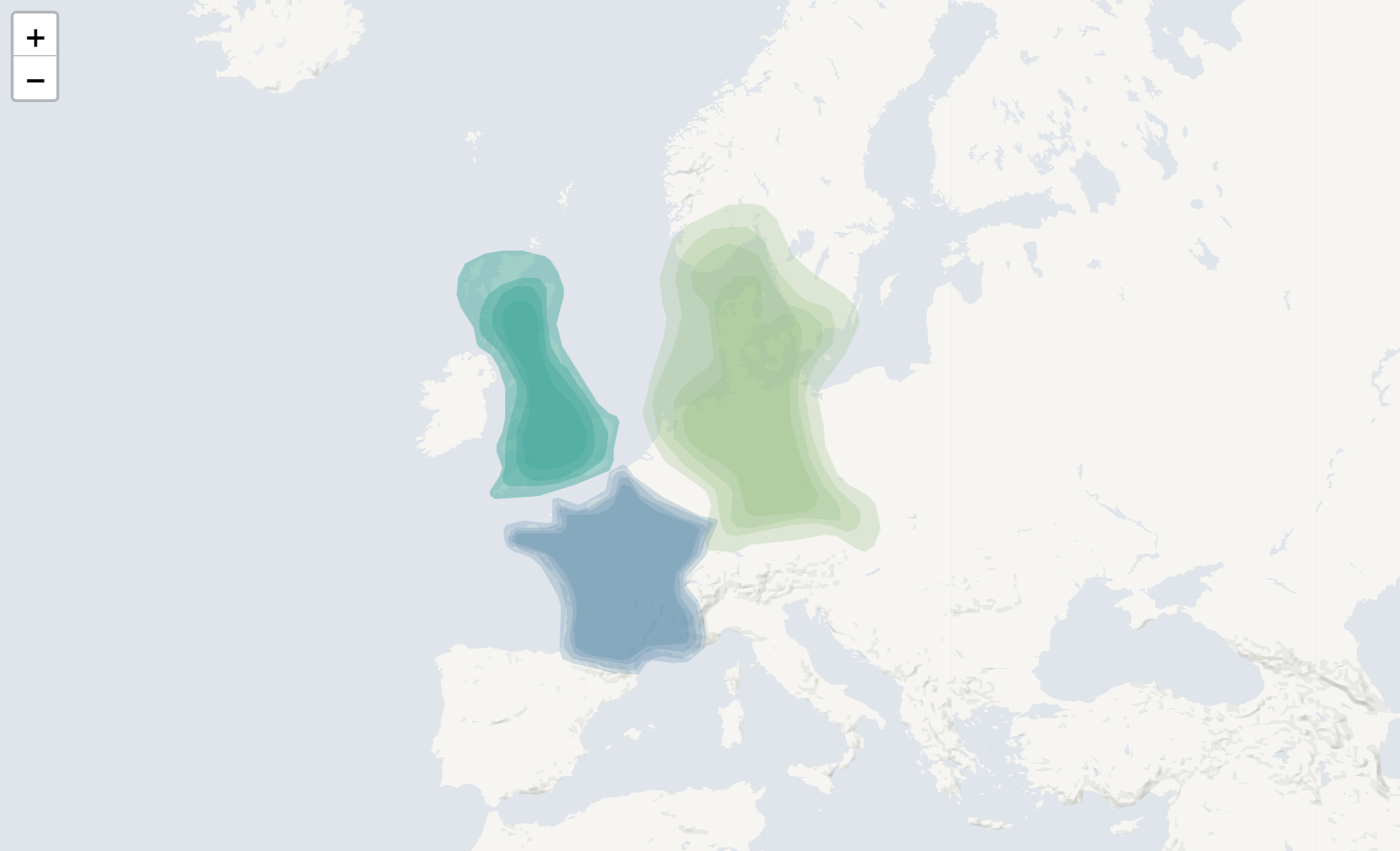
The Medieval Era saw waves of change sweep across the British Isles, from Viking raids to Norman conquests. Yet our ancestors stood steadfast, carrying on Celtic traditions while adapting to the tides of history.
The Viking influence in our DNA is a testament to the Norse explorers and settlers who left their mark, particularly in northern Britain. Whether through trade, conquest, or settlement, their legacy is etched into our genetic story.
The Norman French element reflects one of the most transformative events in British history—the Norman Conquest of 1066. Our ancestors, no strangers to change, embraced and blended with the new Norman rulers, forging the foundations of modern Britain.
Insular Celt
51.4%
Pict
30.2%
Roman Britain
21.2%
Germanic
24.6%
Viking activity in the British Isles occurred during the Early Middle Ages, the 8th to the 11th centuries AD, when Scandinavians travelled to the British Isles to raid, conquer, settle and trade.
Scandinavian Viking (Nordland)
22.2%
Nordland is one of the three most northern counties in Norway.
Scandinavian Viking (Sealand)
2.4%
Zealand (Sealand) is the largest island in Denmark.
French
24%
The French component in this period is likely a result of the Norman Invasion of 1066, led by William the Conqueror.
From Celtic to Welsh
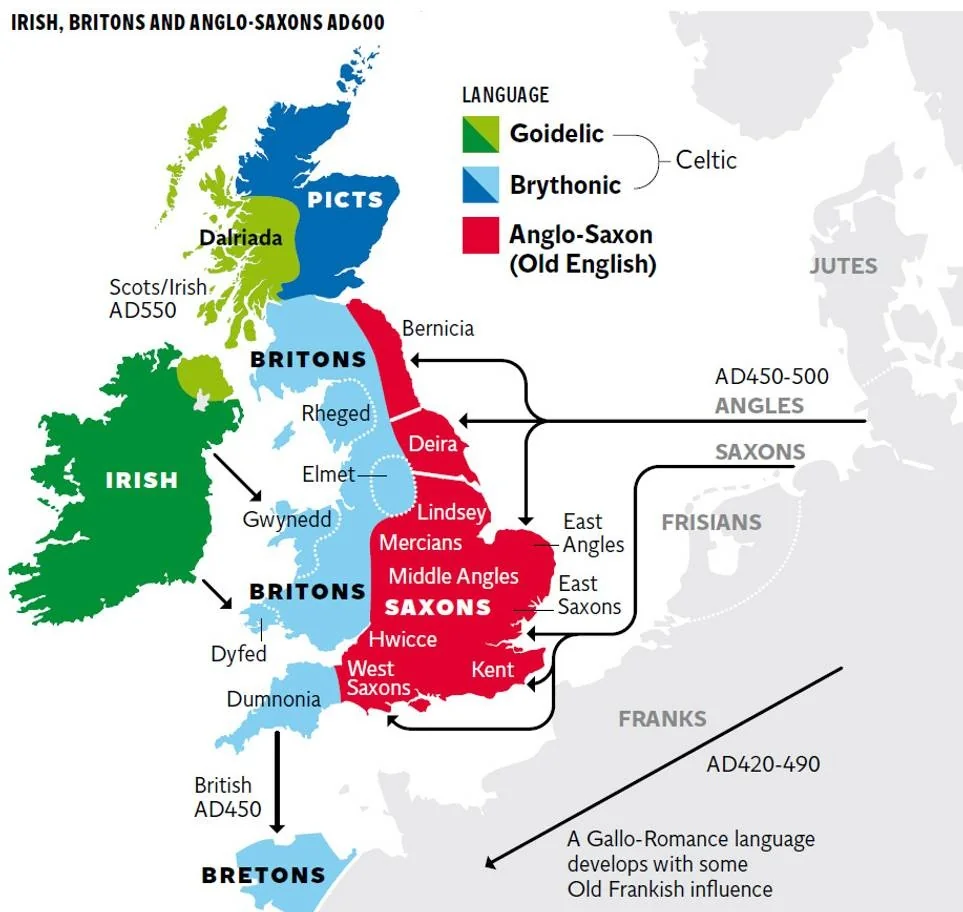
Following the end of Roman rule in Britain during the 5th century, Anglo-Saxon settlement of eastern and southern Britain began. The culture and language of the Britons fragmented, and much of their territory gradually became Anglo-Saxon.
By the 11th century, Brittonic-speaking populations had split into distinct groups: the Welsh in Wales, the Cornish in Cornwall, the Bretons in Brittany, the Cumbrians of the Hen Ogledd (“Old North”) in southern Scotland and northern England, and the remnants of the Pictish people in northern Scotland.
Common Brittonic developed into the distinct Brittonic languages: Welsh, Cumbric, Cornish and Breton.
Modern history
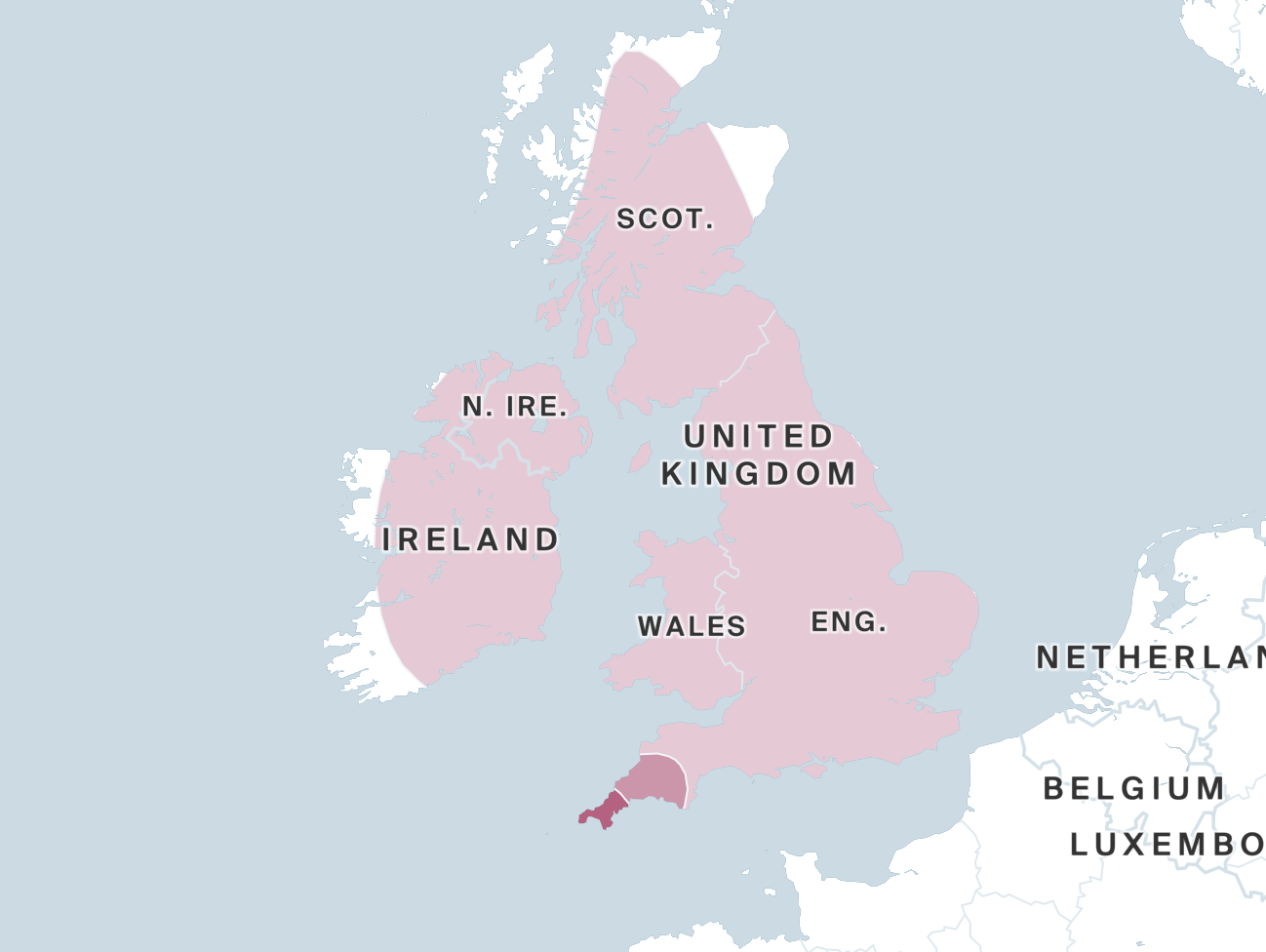
All of that history makes up the end result today — primarily Celtic genes via Wales (& Cornwall) with a nice helping of English (some combination of Celt, Anglo-Saxon and French) with a large representation of the Germanic component.
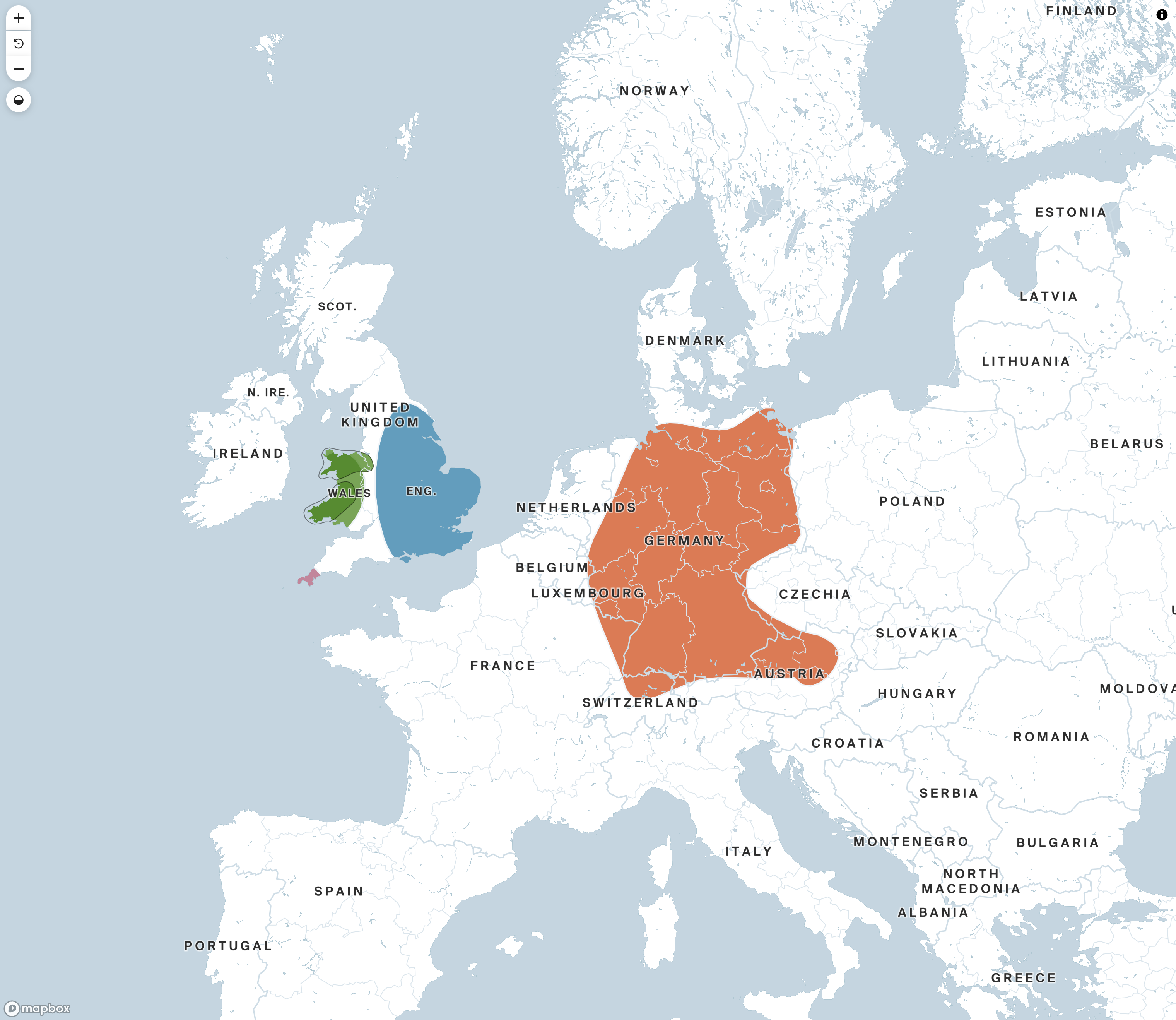
Wales
50%
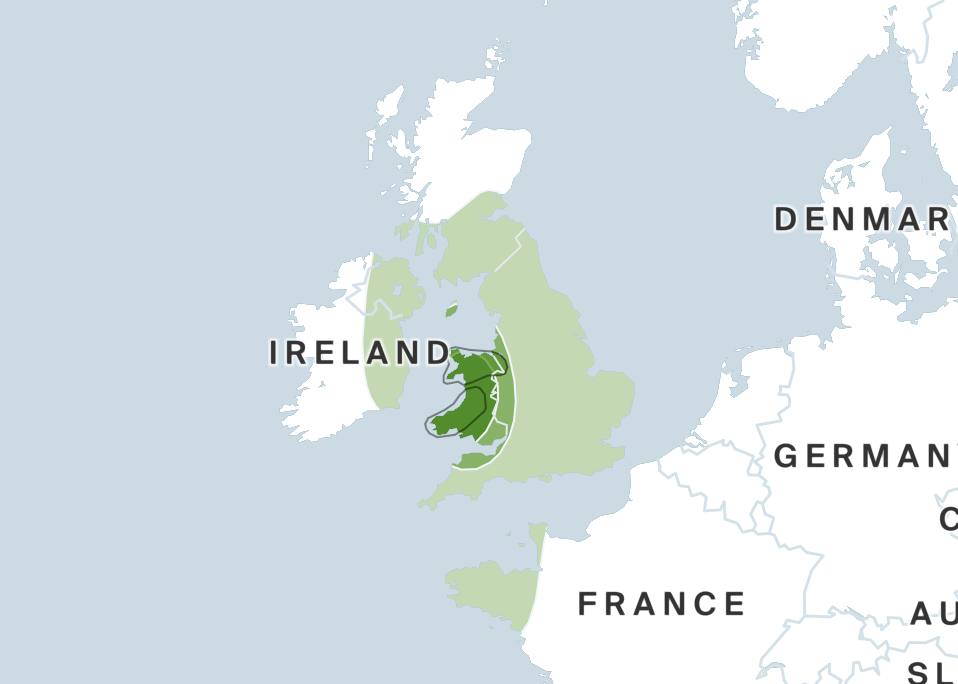
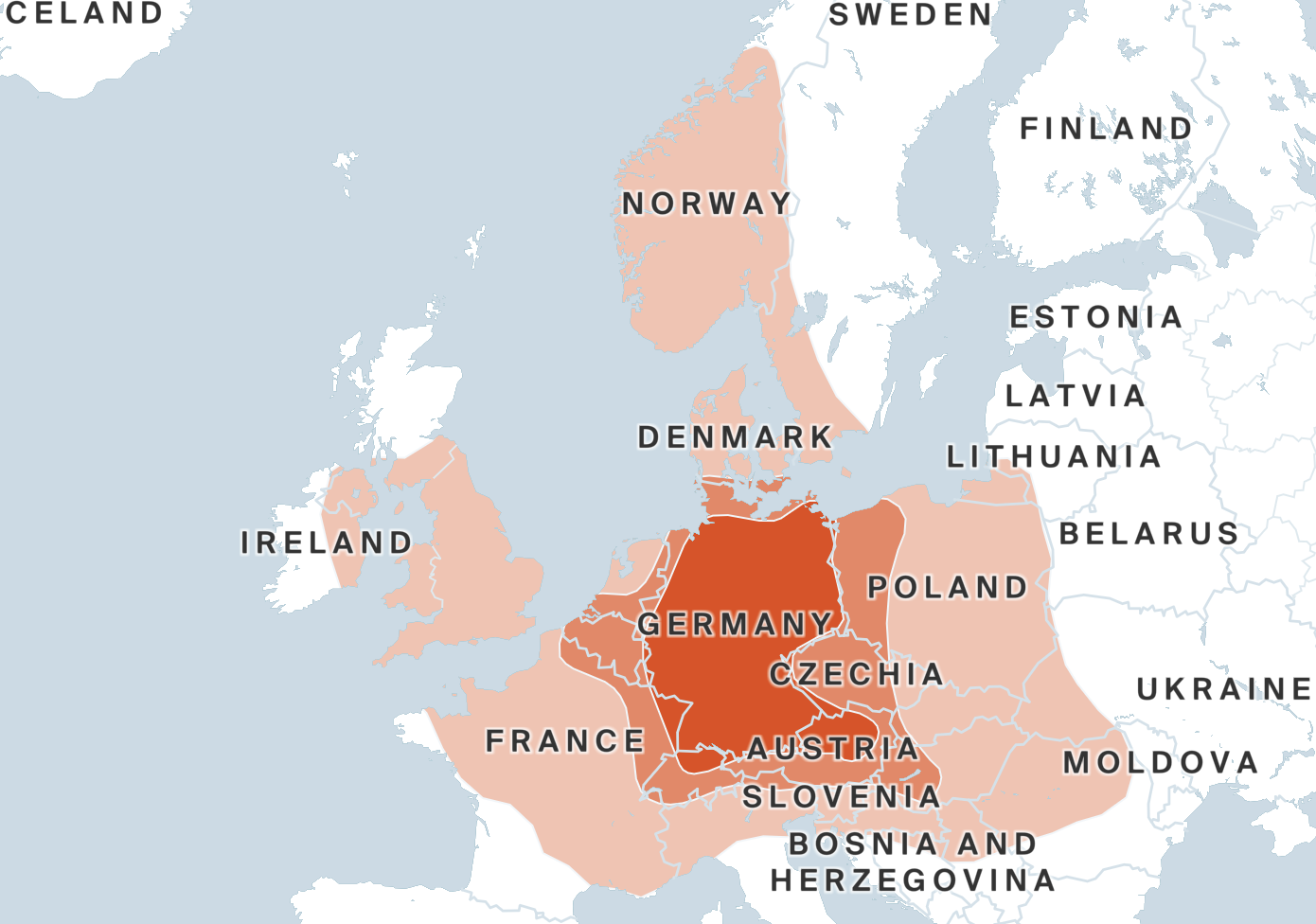
England & Northwestern Europe
32%
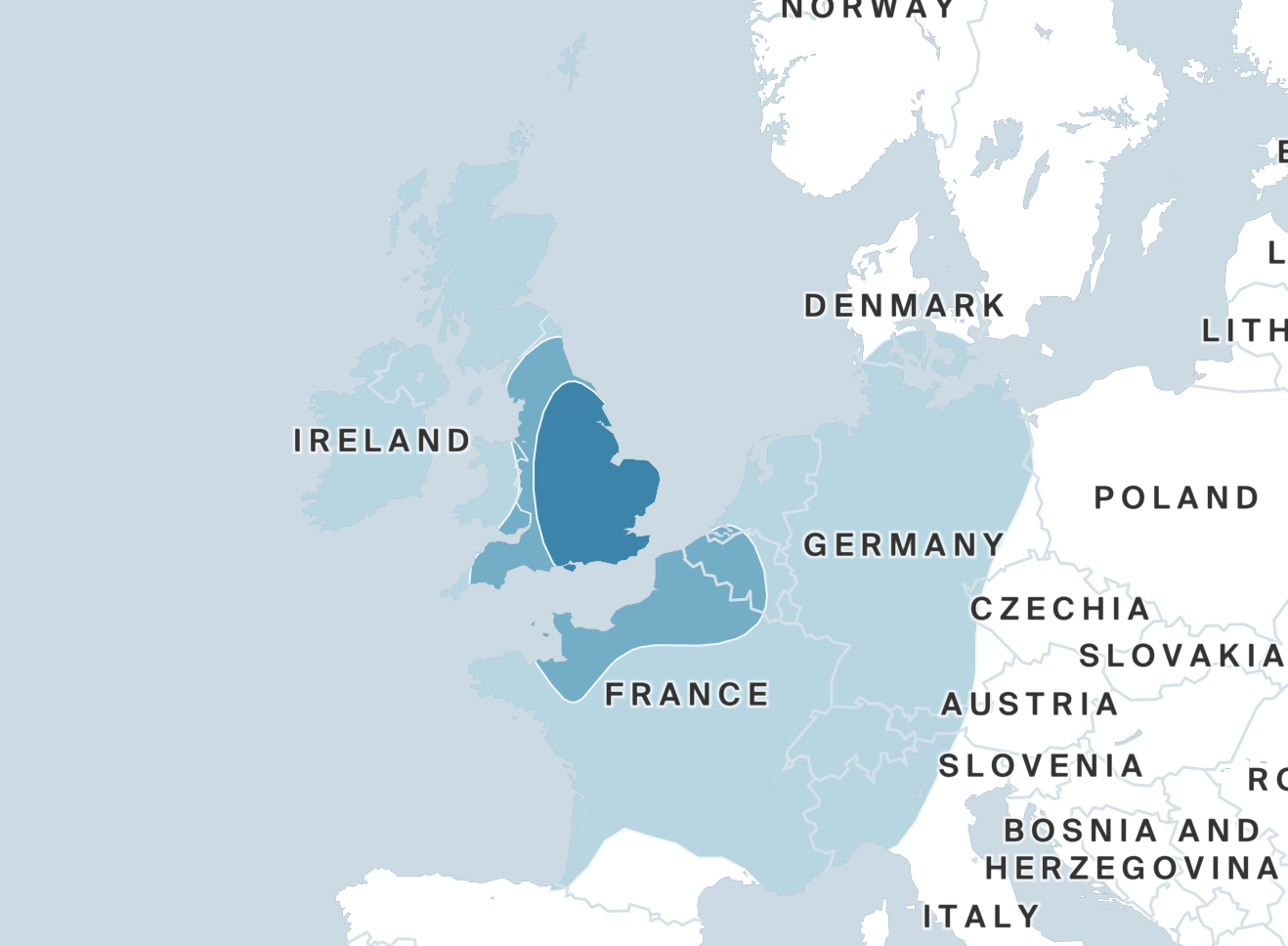
Germanic Europe
15%
Cornwall
3%
Modern history by parent
The vast majority of our Celtic genes come Mum in the form of Welsh and Cornish, and much less from Dad (sorry Dad!). More of our English genes and all of our Germanic genes come from Dad.
Wales
Maternal
41%
Paternal
9%
England & Northwestern Europe
Maternal
6%
Paternal
26%
Germanic Europe
Maternal
0%
Paternal
15%
Cornwall
Maternal
3%
Paternal
0%
Genetic neighbours
Closest ancient samples
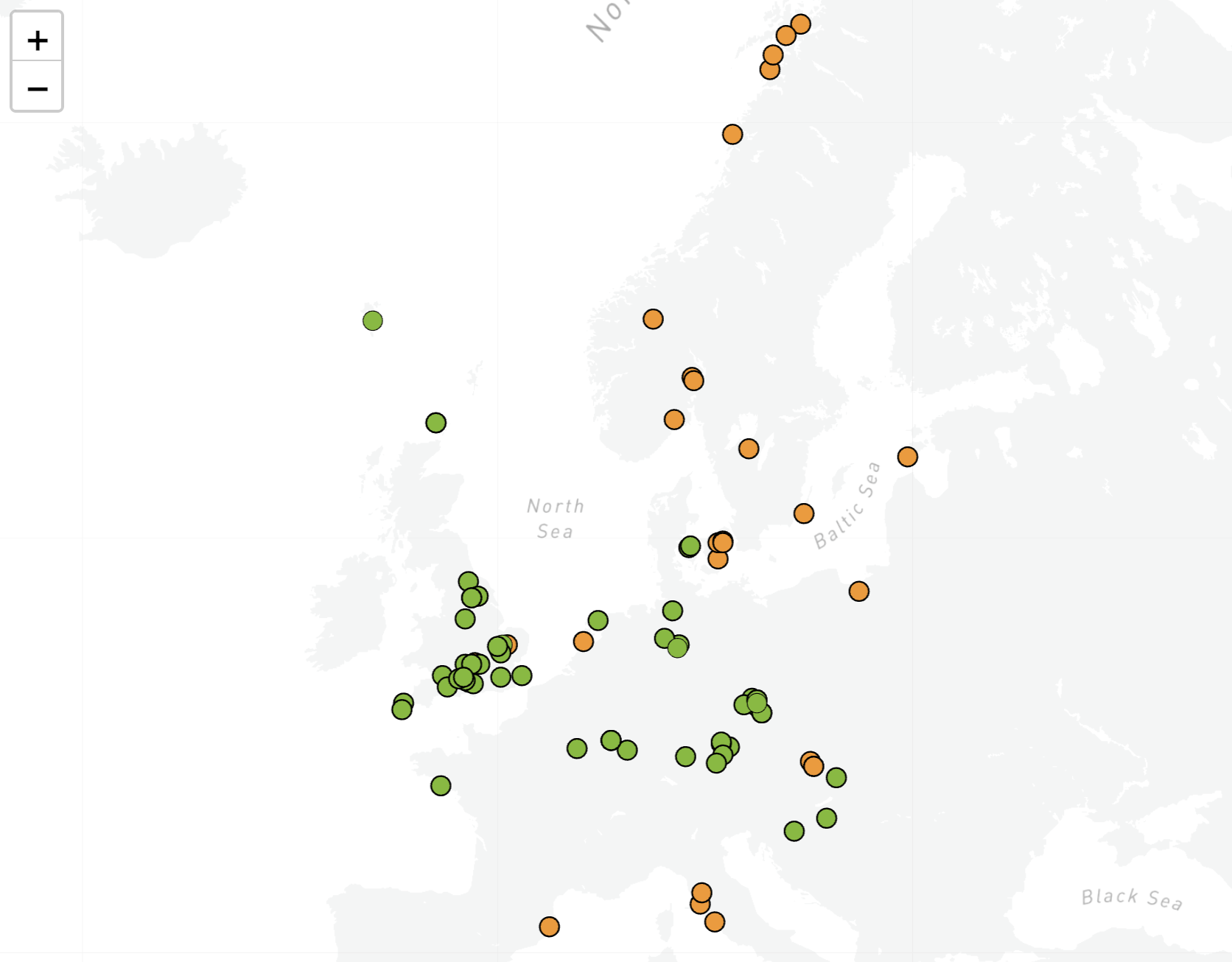
These are real DNA samples from ancient graves, ranked by ‘closeness’ to our own DNA:
- Iron Age Briton (450 BC - 110 AD)
- Medieval Schleswig (Northern Germany, 1070 - 1210 AD)
- Romano-Briton (43 - 400 AD)
- Medieval Gael (Ireland, 600 - 1300 AD)
- Post-Medieval Faroese (Faroe Islands, 1500 - 1700 AD)
- Medieval Frisian (Netherlands, Germany, 775 - 1155 AD)
- Longobard (Hungary, Slovakia, Austria, 540 - 568 AD)
- Pre-Christian Gael (Iceland, 870 - 1000 AD)
- Baiuvarii (Germany, 450 - 550 AD)
- Gaul (Czech Republic, 400 - 180 BC)
- Saxon (Germany, 400 - 800 AD)
Comparison with ancient population averages
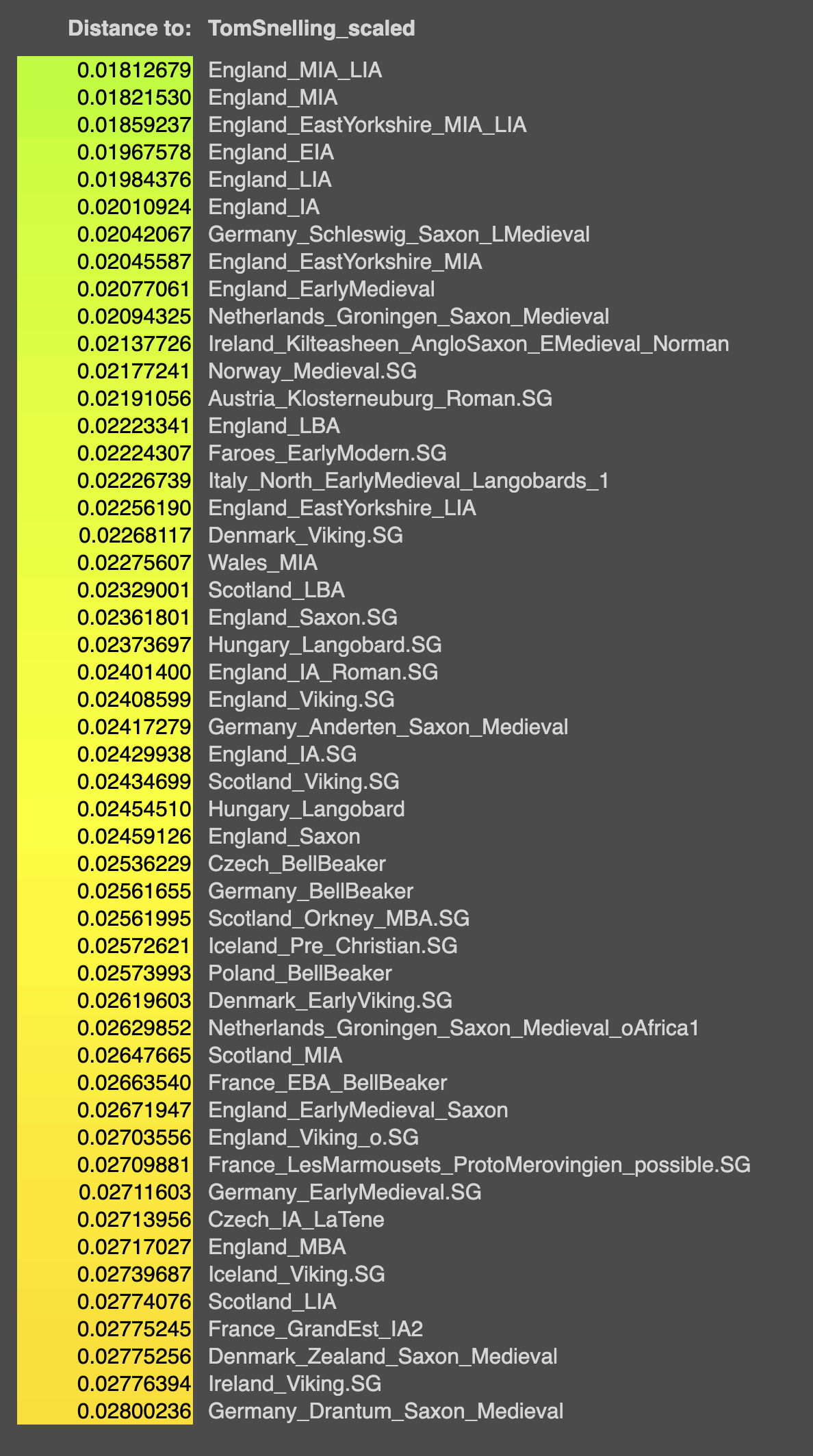
These are compared to ancient population averages, e.g. based on many graves/samples. The top of the list (smaller numbers) are the closest. (EIA/MIA/LIA = early/middle/late iron age, BA = bronze age).
Comparison with ancient single samples
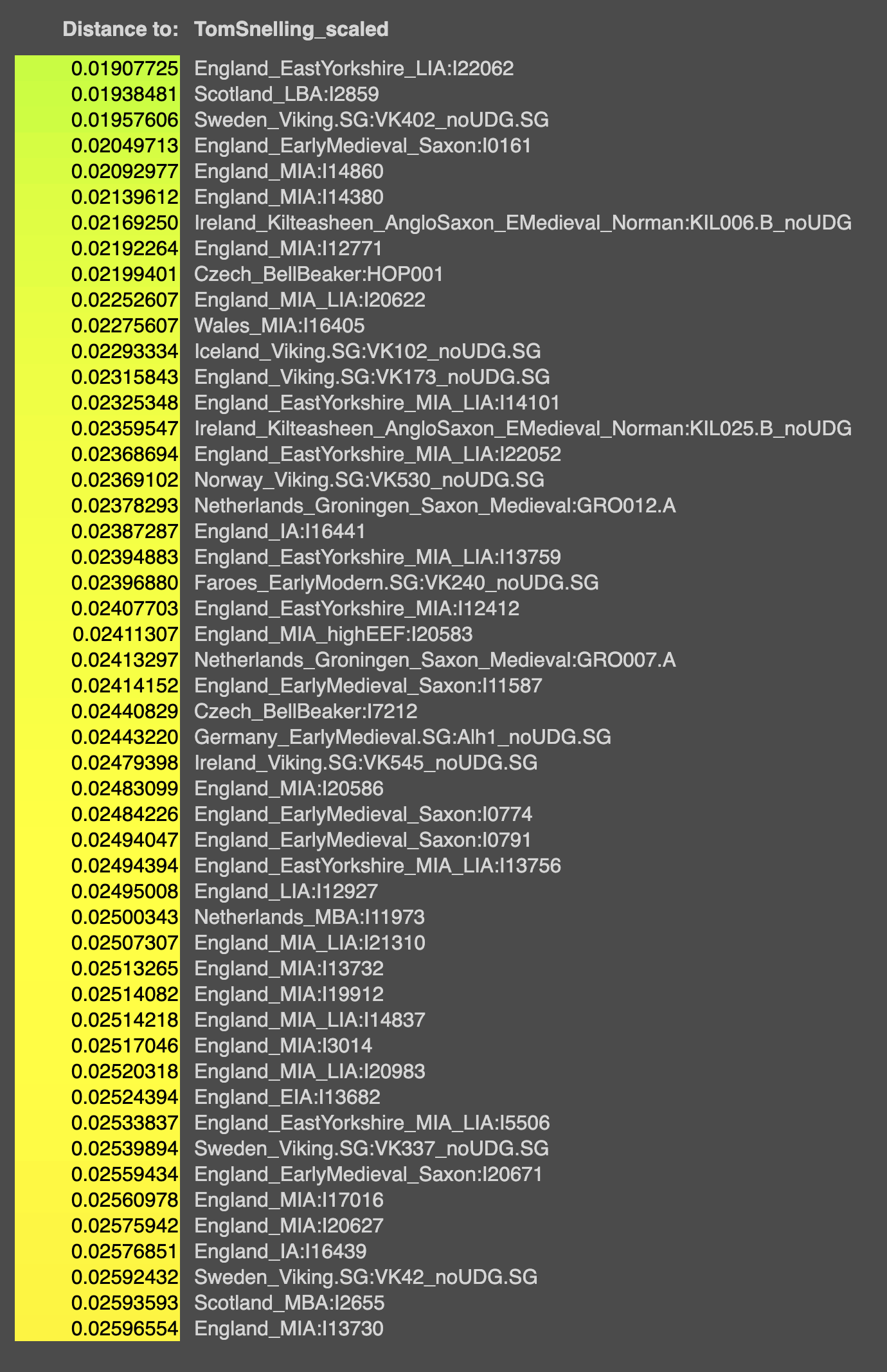
These are compared to individual grave samples, rather than averages.
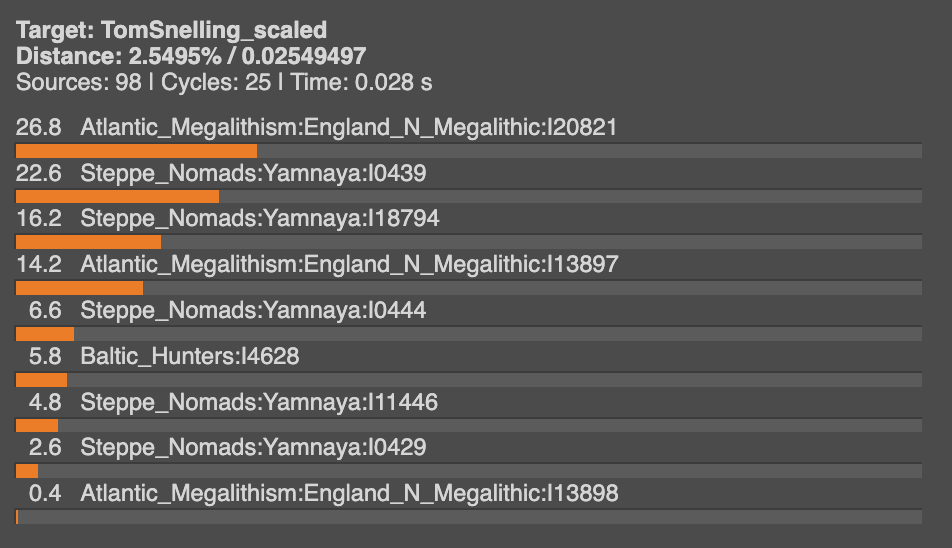
Mr. I20821 at the top here shows quite a high similarity in this calculator. He was buried just down the road from me in the Cotswolds around 3600 BC – I like to think he’s our 190th great-grandfather!
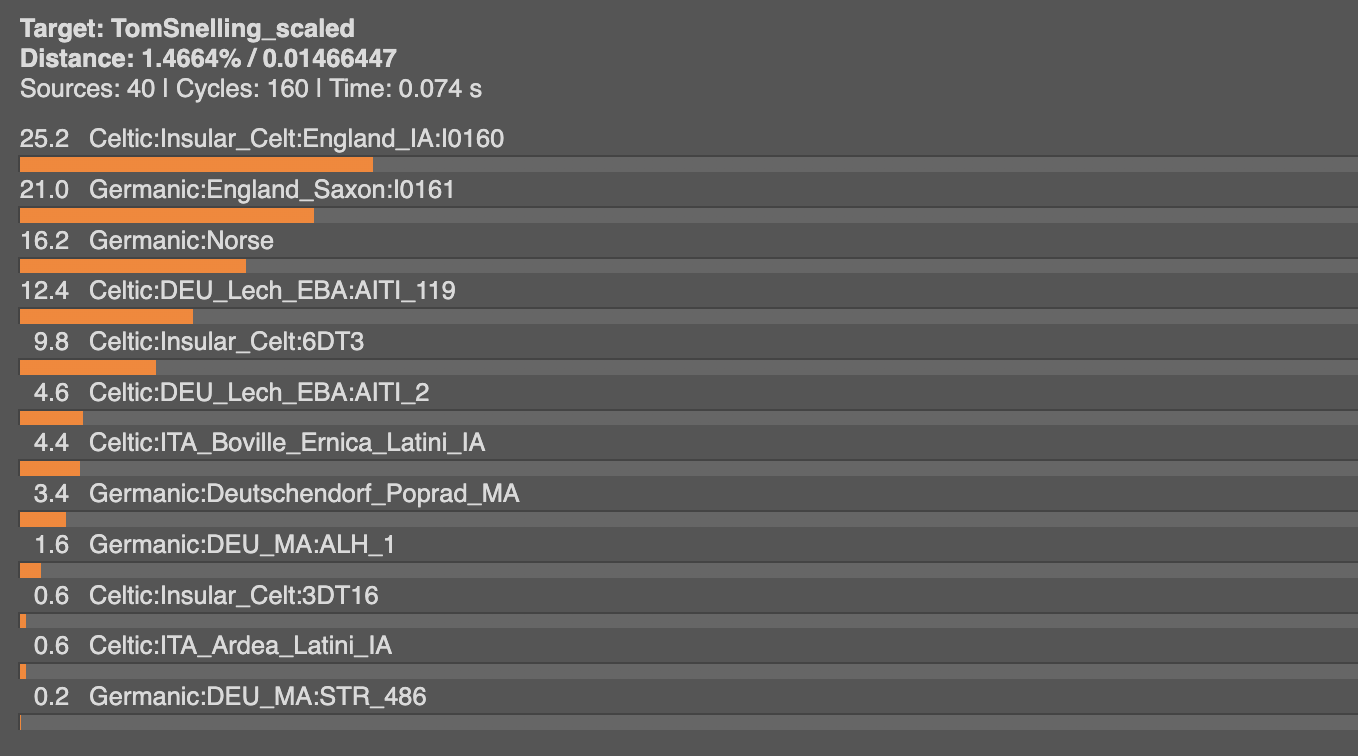
This particular Celtic vs. Germanic calculator shows lots of Celtic similarity, but some close Saxon and Norse samples too.
Closest modern populations
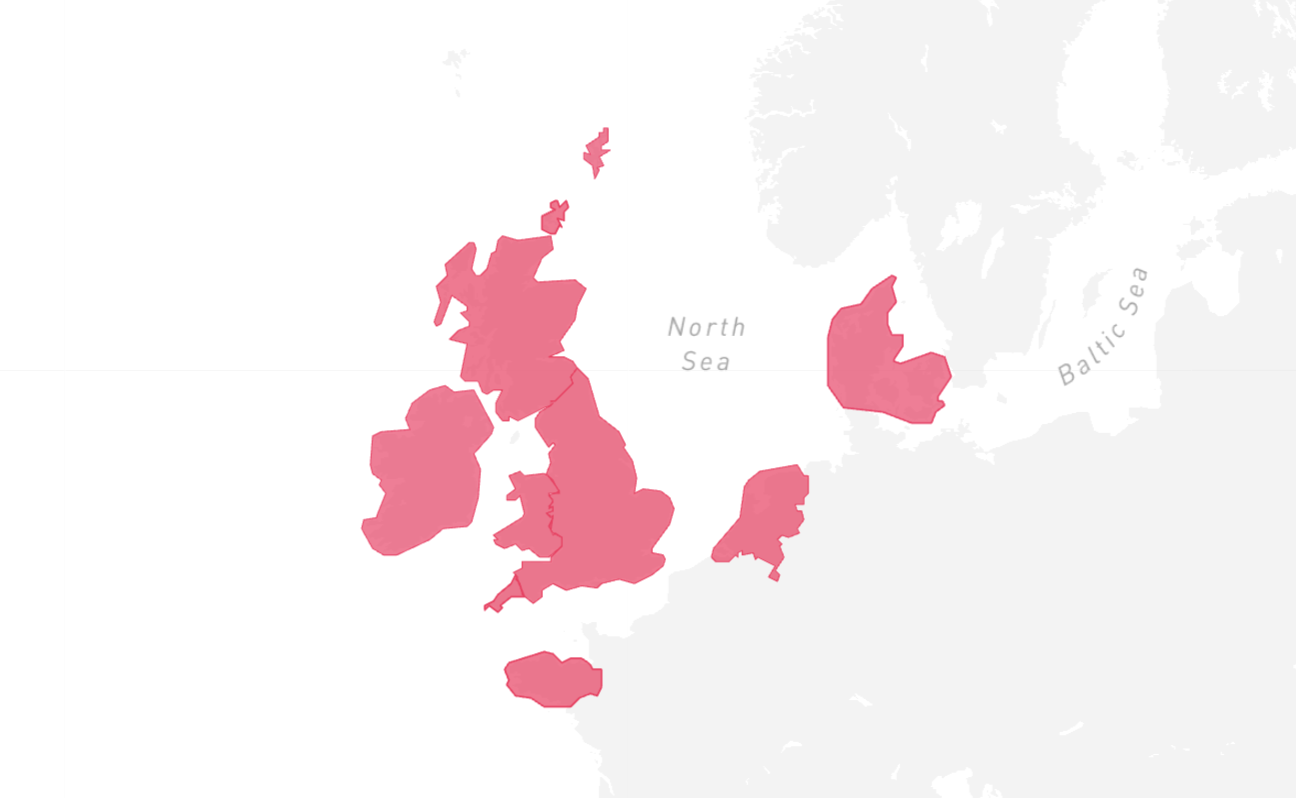
- Welsh
- Cornish
- English
- Scottish
- Dutch
- Orcadian (Orkney)
- Breton
- Irish
- Shetlander
- Danish
Some more interesting ancient population comparisons
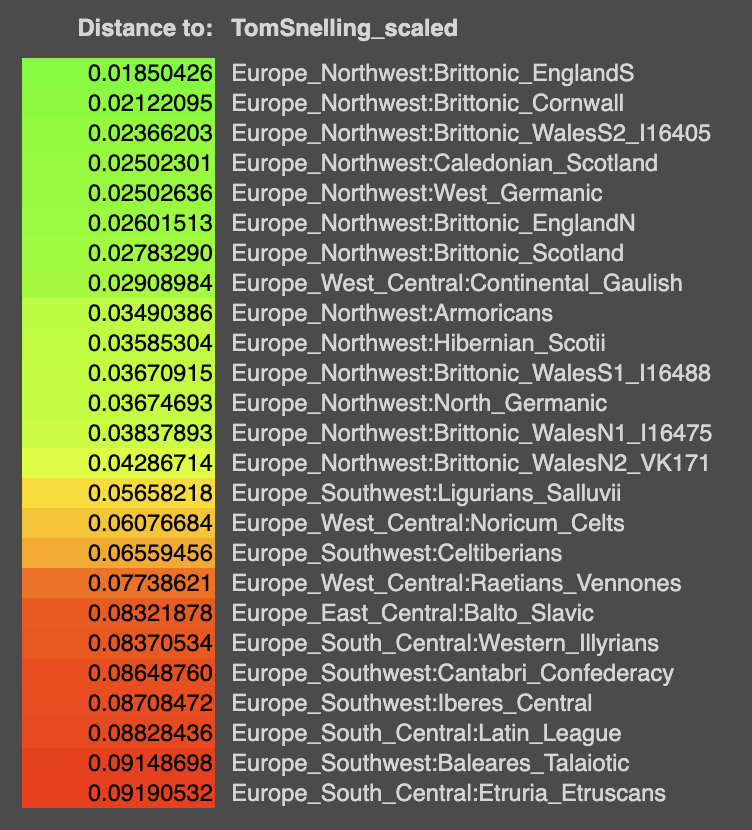
6th Century BC
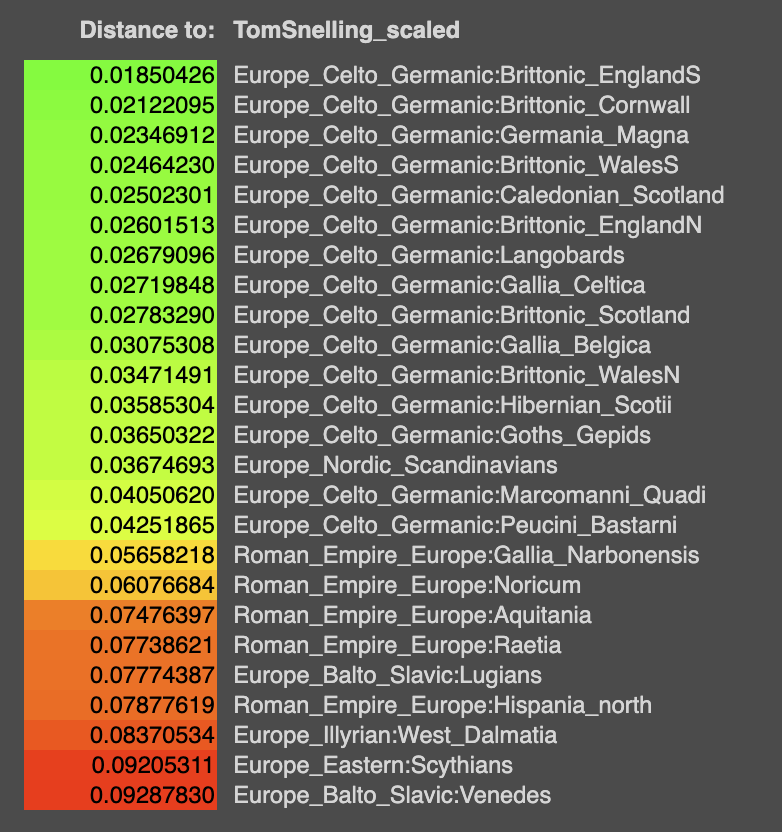
1st Century BC
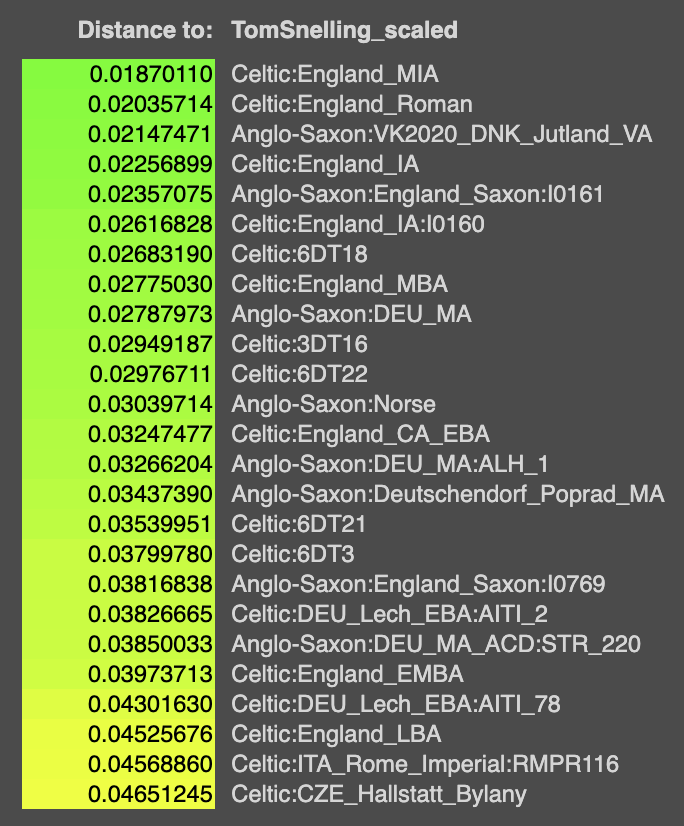
British Isles
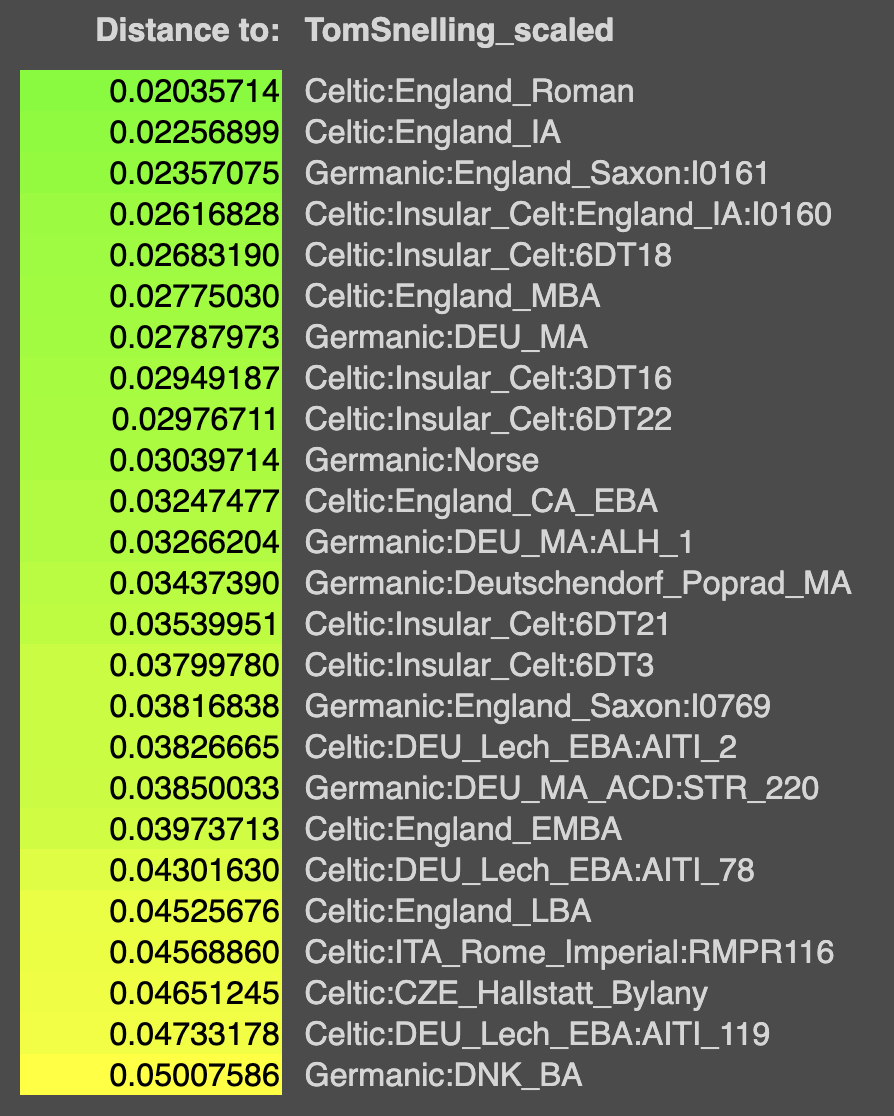
Celto-Germanic
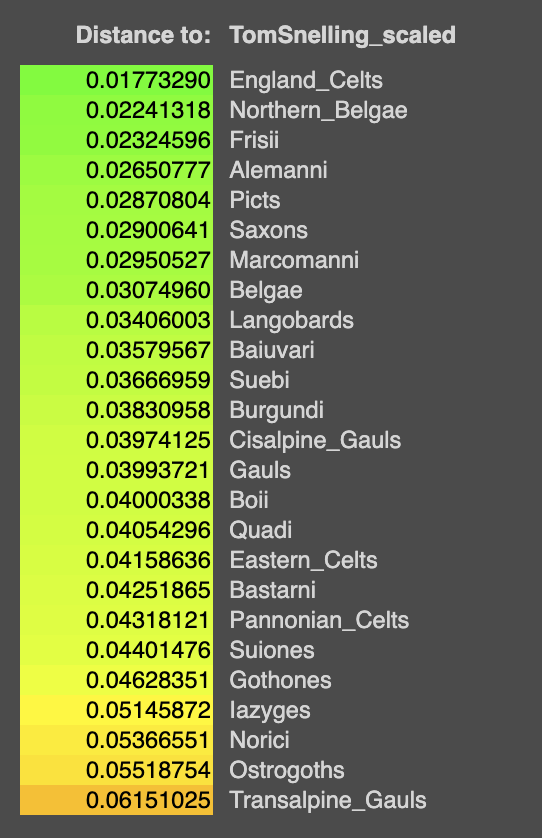
European tribes
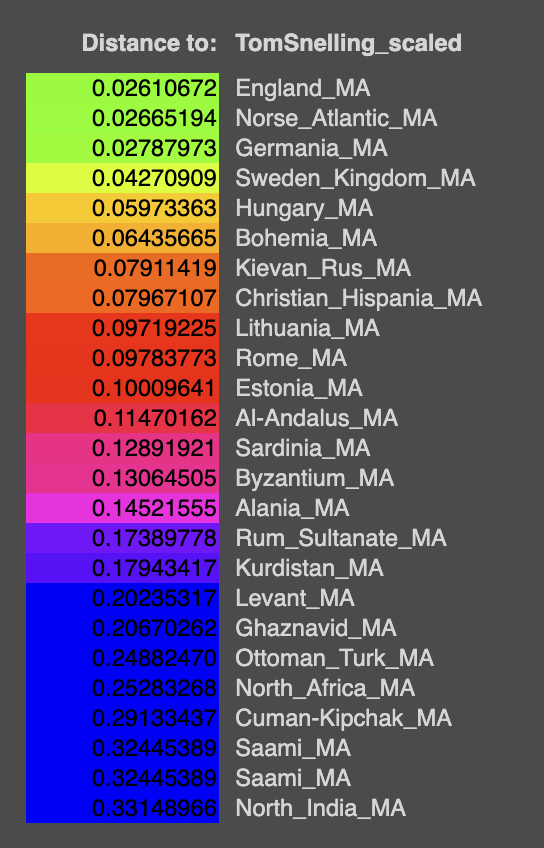
Medieval
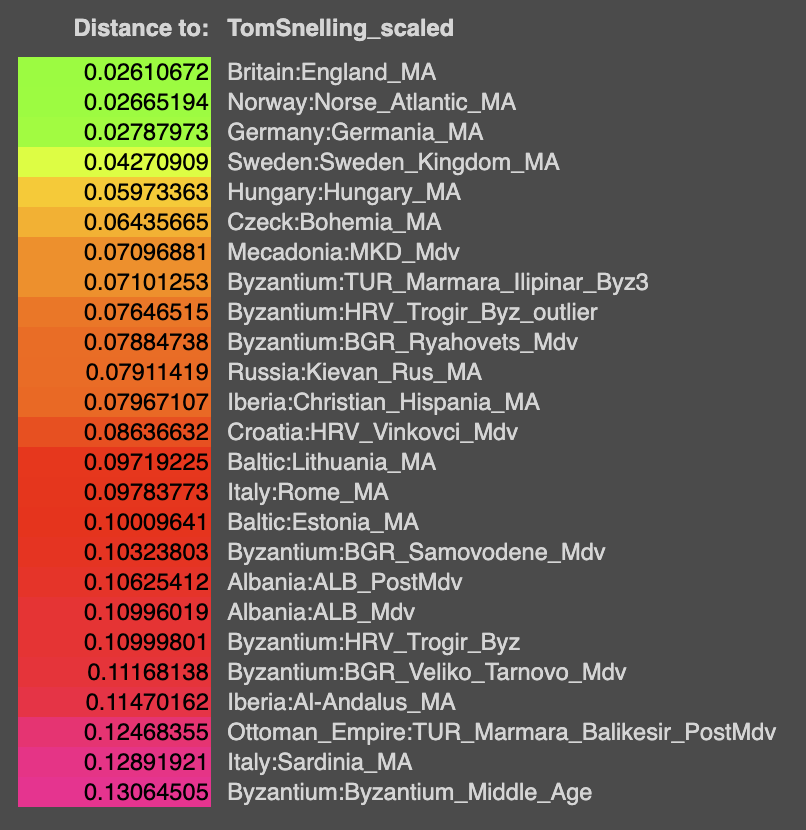
Medieval
Summary
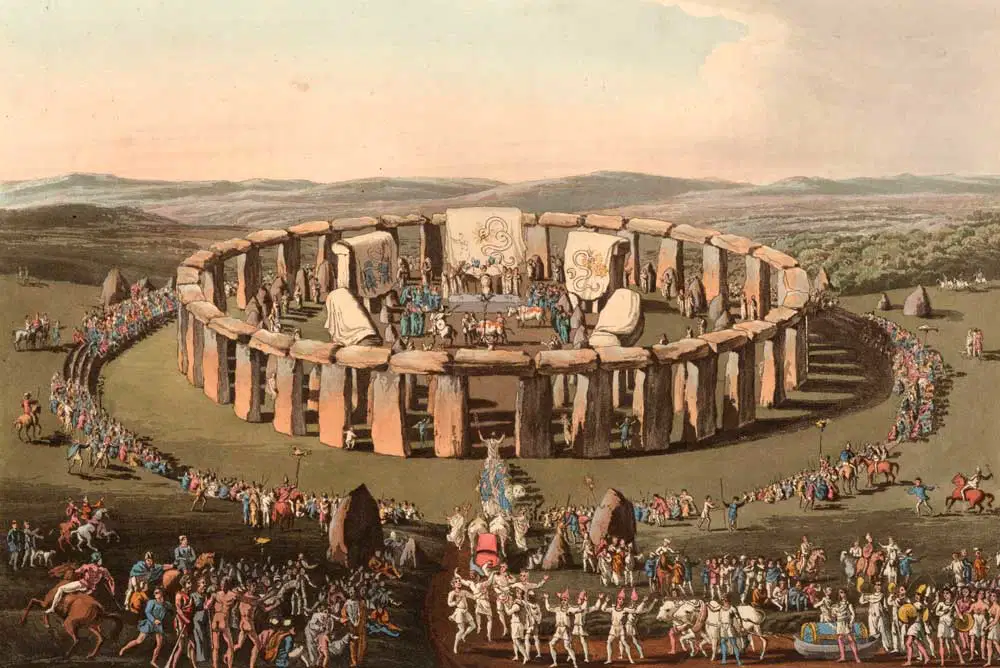
Our stock is of some of the oldest inhabitants of Britain – we’ve been here forever! It’s highly likely that we had ancestors on this island when Stonehenge was built.
Our ancient Celtic genes remain the strongest, along with mixture from various Germanic peoples. Our Celtic genes come from both parents (but mostly Mum) and our Germanic genes come entirely from Dad.
Some mix of Celtic, Germanic, and more modern French DNA is representative of a modern Briton. Our results certainly represent Welsh heritage, with more Celtic and less Anglo-Saxon genes than an average Englishman. This is supported by scientific studies:
A study published in 2016 compared samples from modern Britain and Ireland with DNA found in skeletons from Iron Age, Roman and Anglo-Saxon era Yorkshire. The study found that most of the Iron Age and Roman era Britons showed strong similarities with both each other and modern-day Welsh populations, while modern southern and eastern English groups were closer to a later Anglo-Saxon burial.
Another study, published in 2020 and based on Viking era data from across Europe, suggested that the Welsh trace, on average, 58% of their ancestry to the Brittonic people, up to 22% from a Danish-like source interpreted as largely representing the Anglo-Saxons, 3% from Norwegian Vikings, and 13% from further south in Europe such as Italy, to a lesser extent, Spain and can possibly be related to French immigration during the Norman period
What we can say for sure is that we have been Celtic (and thus Welsh) for all of our history – as opposed to of primarily Anglo-Saxon or Norman (read: “English”) stock that moved to Wales in more recent history.
Be proud of where you come from! Before the Normans, the Anglo-Saxons, even the Romans, this island belonged to the Britons. This truly is your homeland – you have more claim to it than anyone.
I hope this has been as interesting for you as it has for me! Tom x